
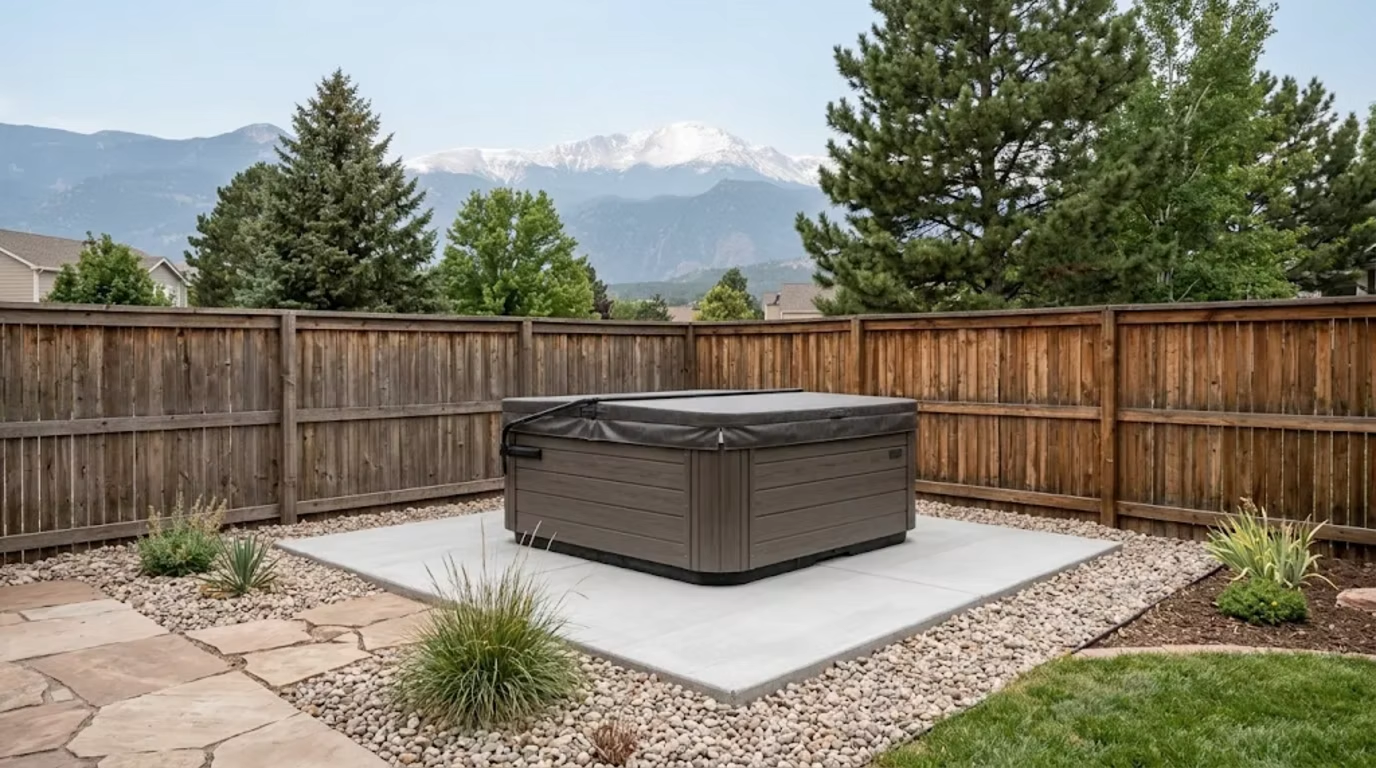
A filled hot tub can weigh several tons, and all of that weight sits on whatever is underneath it. A properly built concrete hot tub pad keeps the shell level, protects your warranty, and stops the tub from sinking into Denver’s expansive clay soil. Here’s what a good pad needs before the spa arrives.
Getting a hot tub delivered soon? Request a free hot tub pad estimate from CC Concrete LLC →
Why a hot tub needs a real concrete pad
Most manufacturers require a flat, level, solid foundation for the warranty to stay valid. Pavers, gravel, and decks can work in some cases, but they can settle unevenly. When a tub sits out of level, the shell and frame take stress they weren’t designed for, and that is the kind of damage warranties often exclude.
A monolithic concrete slab spreads the load evenly and stays flat for years, which is why it’s the most common choice in Colorado backyards.
It also helps to think about what happens around the tub. People step in and out with wet feet, covers get lifted and slid, and water splashes over the edge. The pad has to stay safe and slip-resistant through all of that, including on icy winter nights when hot tubs get the most use in Colorado.
Size, thickness, and reinforcement
- Size: Make the pad larger than the tub on every side so there is room for the cover lift and for you to walk around it. Your spa dealer’s spec sheet lists the exact footprint.
- Thickness: Hot tub pads are typically thicker than a standard patio. We confirm the right thickness against your tub’s filled weight.
- Reinforcement: Rebar or welded wire keeps the slab together if the soil moves. See our cost guide for how reinforcement affects pricing.
- Level: The surface must be level, not sloped like a patio, while the area around it should still drain away from the house.
Base preparation in Denver soil
Denver’s clay swells when wet and shrinks when dry. Under a heavy, concentrated load like a hot tub, that movement shows up fast. We excavate, add a compacted gravel base, and make sure water from the tub and roof has somewhere to go. Our article on proper sub-base preparation explains why this step matters more than the concrete itself.
Location matters too. Avoid low spots where runoff collects, and keep the pad away from downspouts that dump roof water next to the slab. Water that soaks the clay under one side of the pad is the most common reason a hot tub goes out of level.
Plan the electrical and access before the pour
Most hot tubs need a dedicated circuit and a disconnect within sight of the tub. Talk to your electrician before we pour so any conduit can be placed or sleeved in advance — cutting into a finished slab later costs more.
Also plan the delivery route. Tubs often arrive on a dolly or by crane, and a new pad can be connected to your patio or a walkway so the area feels finished.
If privacy screens, a pergola, or steps are part of the plan, mention them before the pour. Posts and footings can be planned into the layout instead of being cut into a new slab afterward.
Frequently asked questions about hot tub pads
Do I need a permit for a hot tub pad in Denver?
Requirements vary by city and by the electrical work involved. Check with your local building department; we can help you understand what your project needs.
How long after pouring can the hot tub be placed?
Concrete needs time to gain strength before it carries a full, heavy load. We’ll give you a safe date based on the mix and weather, usually measured in weeks rather than days.
Can I put a hot tub on my existing patio?
Sometimes. It depends on the slab’s thickness, reinforcement, and condition. We can inspect it and tell you whether it can carry the load.
Should the pad be stamped or colored?
It can be. Many homeowners match the pad to an existing stamped or colored patio so it looks like one design.
Get a free hot tub pad estimate in Denver
For over 14 years, CC Concrete LLC has built hot tub pads, patios, and backyard slabs across Denver, Thornton, Erie, Brighton, Broomfield, Westminster, Arvada, and surrounding communities. We check your spa’s specifications, your soil, and your drainage before we quote. Seniors and military members receive a 10% discount on all projects.
- Licensed and insured in Colorado since 2011, led by founder Cesar
- 4.9★ average from 82 Google reviews
- Free on-site estimates; written quotes include demolition and haul-away
- Air-entrained concrete mix for Denver’s freeze-thaw conditions
- Reinforced slabs sized to your spa’s specs
- Pads that tie into existing patios and walkways
Start with a solid foundation
A hot tub is only as good as the slab under it. A level, reinforced pad on a compacted base protects your investment and your warranty for years. Schedule your free on-site estimate today →