
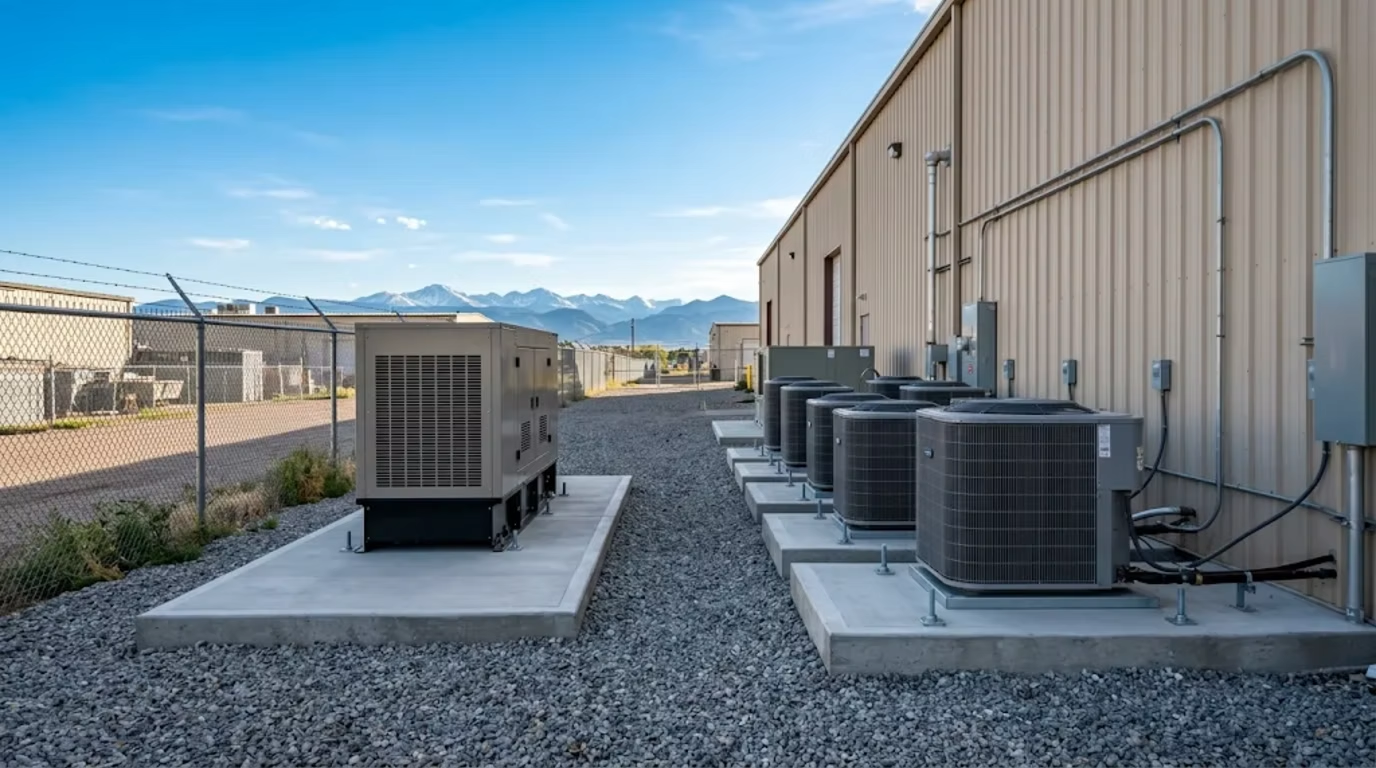
HVAC units, generators, transformers, compressors, and shop machinery all need a solid place to sit. A concrete equipment pad keeps them level, isolated from the soil, and secured against wind and vibration. On commercial projects, it also has to match the equipment spec and the inspector’s checklist. Here’s what goes into a good one.
Have equipment pads on an upcoming job? Send CC Concrete LLC the specs for a bid →
Common equipment pads
- HVAC and rooftop-unit ground pads: Condensers and package units on commercial and multifamily sites.
- Generators: Standby generators for homes, offices, and critical facilities.
- Transformers: Utility pads built to the power company’s specification.
- Shop and process machinery: Compressors, lifts, and machines that need a thicker, reinforced section.
Each type of equipment has its own requirements for size, clearances, and anchoring. Manufacturer installation guides and the project drawings set those details, and the pad has to match both.
What makes a pad work
- Size and thickness: Set by the equipment manufacturer and the engineer, with clearance for service access.
- Reinforcement: Rebar sized to the load. See rebar vs. wire mesh vs. fiber.
- Level surface: Equipment must sit level; tolerances are tighter than for patios.
- Anchors and embeds: Bolts, sleeves, and conduits set in the right place before the pour.
- Base and drainage: A compacted base and a pad set above grade so water doesn’t collect around equipment.
Vibration is often overlooked. Compressors, generators, and some machines vibrate constantly, which can loosen anchors and crack thin pads over time. A properly sized, reinforced pad with correct anchor embedment keeps equipment secure for its service life.
Coordinating with other trades
Equipment pads sit at the meeting point of electrical, mechanical, and civil work. Conduit stub-ups, gas lines, and anchor bolt locations have to be right the first time. We review the drawings and confirm locations with the trades before forming so nothing has to be core-drilled later.
Inside shops, thicker slabs for machinery follow the same principles we use for garage floors, with more reinforcement and attention to joints.
Pads that sit next to buildings also need to respect the building’s waterproofing and drainage. Water directed toward a foundation by a poorly sloped pad can become a problem long after the equipment is running.
Fast turnaround for GCs
Equipment pads are small pours that can hold up big milestones, like power-up or mechanical startup. We schedule them to fit the project, and with cold-weather practices they can be poured through most of the Denver winter.
To get pads on your schedule, see our contractor services page.
Clear communication about turnover dates matters most here. We let the GC know when a pad can safely take equipment, so cranes and delivery trucks aren’t booked too early.
Frequently asked questions about equipment pads
Can you build transformer pads to utility specs?
Yes. We build to the specification provided by the utility or engineer.
How soon can equipment be set?
It depends on the mix, the load, and the weather. We’ll give you a target date before the pour.
Do you install anchor bolts?
We set anchor bolts, sleeves, and embeds per the drawings before placing concrete.
Do you do small pours?
Yes. Small equipment pads are a regular part of our commercial work.
Equipment pads on your schedule
For over 14 years, CC Concrete LLC has built equipment pads and commercial flatwork for contractors and owners across Denver, Thornton, Erie, Brighton, Broomfield, Westminster, Arvada, and surrounding communities.
- Licensed and insured since 2011; COI and W-9 sent with every bid
- Itemized bids within 48 hours of plans, photos, or a site walk
- Crews and equipment for residential and light commercial flatwork
- Air-entrained mixes and cold-weather practices for Colorado conditions
- Anchors, sleeves, and conduits set before the pour
- Small pours scheduled quickly
Level, solid, and on time
A good equipment pad is level, reinforced, drained, and ready when the equipment arrives — so startup isn’t waiting on concrete. Send your specs for a bid →