
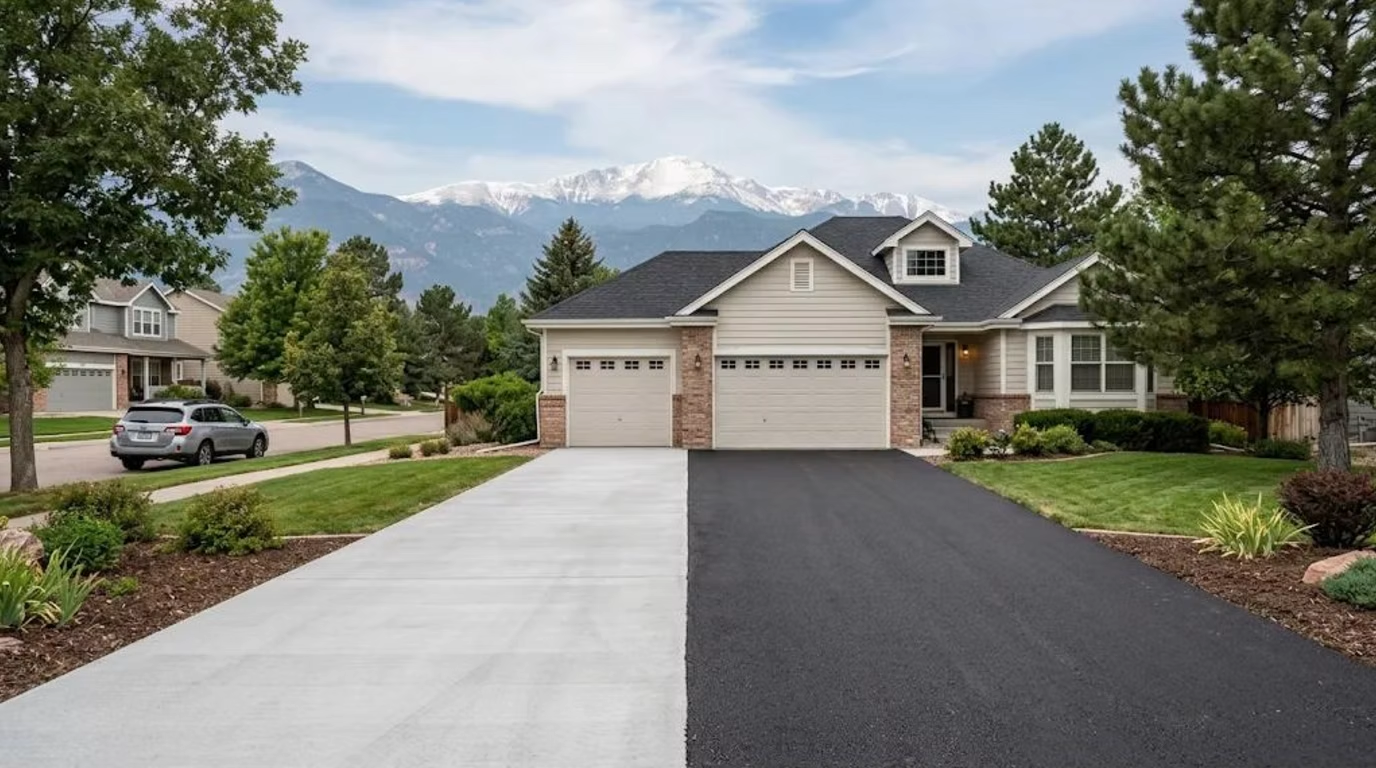
Choosing between concrete vs asphalt is one of the first decisions Denver homeowners make when a driveway reaches the end of its life. Both materials can work in Colorado, but they age very differently under our sun, snow, and freeze-thaw cycles. Here’s how the two compare so you can pick the surface that fits your home, your budget, and how long you plan to stay.
Weighing a new driveway? Request a free on-site driveway estimate from CC Concrete LLC →
How concrete and asphalt are built
Asphalt is a flexible pavement: stone aggregate bound together with petroleum-based binder, laid hot and rolled. Concrete is a rigid slab: cement, sand, and stone that cure into a hard surface, usually reinforced and cut with control joints so it cracks where it’s supposed to.
That difference — flexible vs. rigid — explains most of what follows. Asphalt moves with the ground and softens in heat. Concrete holds its shape and spreads loads, but it depends on a well-prepared base underneath. We cover that base in detail in our guide to why the sub-base matters in Denver.
In practice, the choice also depends on how you use the driveway. A household with one car and a short, flat drive puts far less stress on the surface than a family with a work truck, a trailer, and a long slope down to the street. Tell your contractor how the driveway is used day to day so the thickness and reinforcement match the load.
How each surface handles Denver weather
- Summer heat: Asphalt absorbs heat and can soften, scuff, and rut under parked cars on hot days. Concrete stays cooler and keeps its surface.
- Freeze-thaw cycles: Both suffer when water gets in and freezes. Air-entrained concrete is designed for this; asphalt needs cracks filled regularly to stay ahead of it.
- Snow removal: Concrete takes shoveling and plowing well. Asphalt edges can crumble under repeated scraping.
- De-icers: New concrete is sensitive to salt in its first winter; asphalt tolerates salt better but degrades from oil and fuel spills.
Maintenance and lifespan
Asphalt needs sealcoating every few years and crack filling to reach its expected life. Skip it and the surface dries out, ravels, and potholes. Concrete needs less: periodic cleaning and a penetrating sealer, which we explain in when to seal a concrete driveway in Denver.
With a proper base and reasonable care, a concrete driveway typically outlasts an asphalt one by many years. That longer service life is the main reason concrete often costs less over the time you own the home, even though it costs more on day one.
Edges are where both materials usually fail first. Asphalt edges crumble when they aren’t supported, and concrete edges can crack when soil washes out from beside them. Good drainage and backfilled edges protect either surface, and they cost very little compared with an early replacement.
Cost, curb appeal, and resale
Asphalt usually has the lower installation price. Concrete costs more up front but adds options asphalt can’t match — broom, exposed aggregate, color, or stamped borders. For current numbers, see our concrete driveway replacement cost guide.
Concrete also tends to read as a higher-end finish to buyers. We look at that effect in how a concrete driveway can raise home value in Denver.
If you are replacing an old driveway anyway, the cost of tear-out and base work is similar for both materials. That narrows the real price gap between them and makes the long-term comparison more important than the first quote.
Frequently asked questions about concrete vs. asphalt
Can you pour concrete over an old asphalt driveway?
We don’t recommend it. Asphalt flexes and won’t give a new slab the stable base it needs. The right approach is to remove the asphalt and build a compacted base before pouring.
Which is better for a steep Denver driveway?
Concrete with a broom finish gives better traction in snow and doesn’t soften on hot days, which makes it the more common choice on slopes.
Do HOAs in the Denver area prefer one over the other?
Many HOAs specify concrete driveways. Check your covenants before you decide, especially in newer subdivisions.
How long before I can drive on a new concrete driveway?
Plan on about a week before parking cars on it, and longer for heavy vehicles. We’ll give you a timeline based on the mix and the weather when we pour.
Get a free driveway estimate in Denver
For over 14 years, CC Concrete LLC has installed and replaced concrete driveways across Denver, Thornton, Erie, Brighton, Broomfield, Westminster, Arvada, and surrounding communities. Every project starts with an on-site look at your existing driveway, drainage, and soil so the quote reflects what your property actually needs. Seniors and military members receive a 10% discount on all projects.
- Licensed and insured in Colorado since 2011, led by founder Cesar
- 4.9★ average from 82 Google reviews
- Free on-site estimates; written quotes include demolition and haul-away
- Air-entrained concrete mix for Denver’s freeze-thaw conditions
- Full tear-out of old asphalt or concrete
- Broom, exposed aggregate, and decorative finishes
Choosing the surface that lasts
Asphalt wins on first cost; concrete wins on lifespan, low maintenance, and options. For most Denver homeowners planning to stay put, a properly built concrete driveway is the better long-term value. Schedule your free on-site estimate today →