Every concrete contractor says they stand behind their work. The question is what that actually means on paper. A clear concrete warranty tells you which problems the contractor will come back and fix, which ones are normal for concrete, and what you need to do to keep the coverage. Here’s how to read one before you sign, so there are no surprises a year from now.
Planning a driveway, patio, or slab? Request a free estimate and a written scope from CC Concrete LLC →
What a concrete warranty should cover
A contractor’s warranty is a workmanship warranty. It covers problems caused by how the job was built, not by everything that can happen to a slab over its life. In a good one, you should see:
- Installation defects: Work that doesn’t match the agreed scope, such as the wrong thickness, missing reinforcement, or control joints left out.
- Drainage and slope: Water that pools against the house or garage because the slab was formed with the wrong pitch.
- Surface failures from finishing: Scaling or flaking in the first seasons that comes from overworking or improper curing, not from de-icing salt.
- Settlement from poor base prep: Sinking or heaving caused by a sub-base that wasn’t compacted correctly. We explain why the base matters in our sub-base guide.
It should also state how long coverage lasts, how you file a claim, and how the contractor will fix the problem: repair, partial replacement, or full replacement of the affected section.
What a warranty usually doesn’t cover
Concrete shrinks as it cures, and Denver’s freeze-thaw cycles and expansive clay put it under stress every winter. That’s why almost every warranty in the industry excludes a few things:
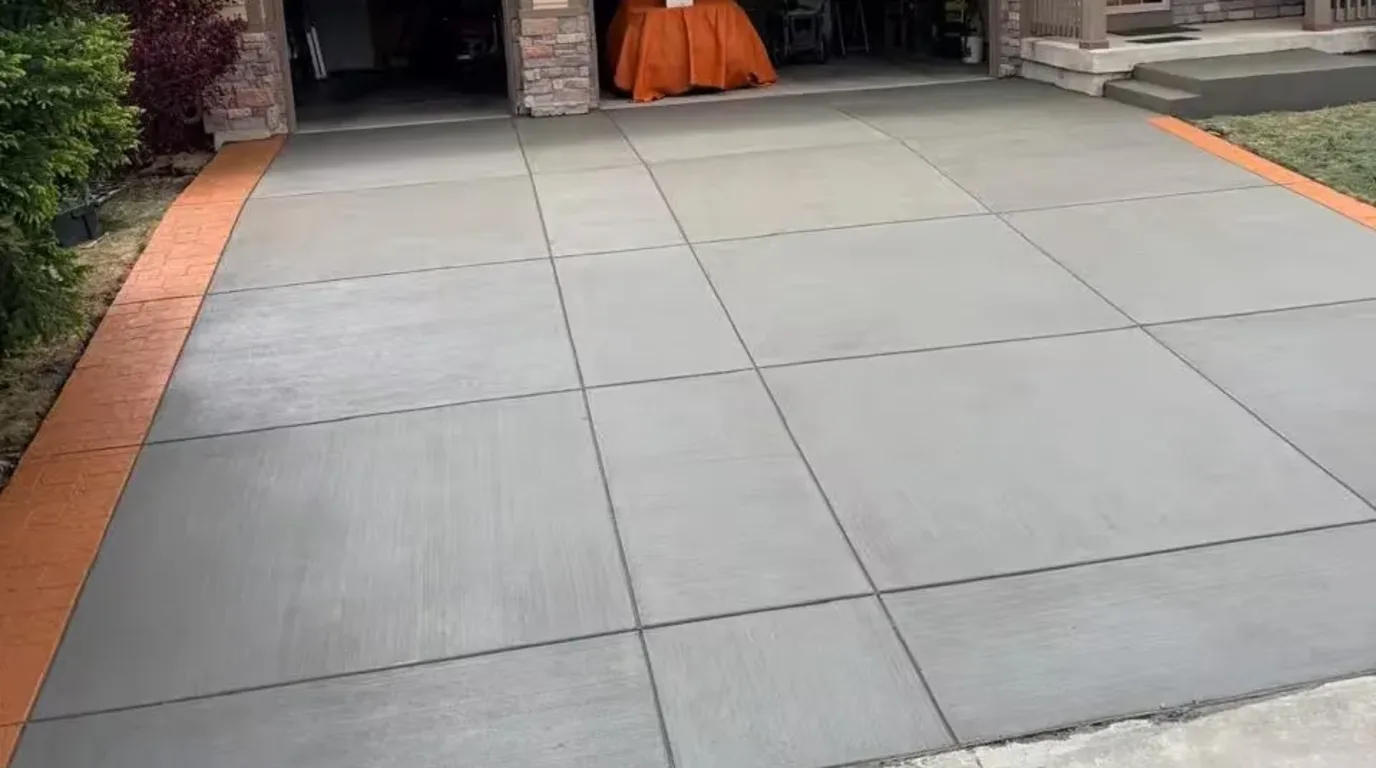
- Hairline shrinkage cracks: Thin cracks, often along or near control joints, are normal. Joints are there to guide them. Our crack repair guide explains which cracks matter.
- Damage from de-icing salt: Rock salt and some chemical ice melts eat at the surface, especially in the first winter.
- Loads beyond the design: A residential driveway isn’t built for loaded dump trucks or heavy equipment.
- Outside causes: Tree roots, downspouts draining under the slab, irrigation leaks, or utility work done after the pour.
- Color variation: Natural shade differences in gray, colored, or stamped concrete.
None of this means the contractor is dodging responsibility. It means the warranty covers the work they control. A good contractor will walk you through these exclusions before the job, not after a problem shows up.
Questions to ask before you sign
- Is the warranty in writing, and is it part of the contract or quote?
- How long does it last, and does it cover labor, materials, or both?
- Which types of cracking are covered, and which are considered normal?
- What do I need to do to keep it valid, such as sealing or avoiding certain ice melts?
- How do I report a problem, and how soon will someone come out to look at it?
Vague answers are a red flag. So is a warranty that sounds too good, like “lifetime, no cracks, guaranteed,” because no honest contractor can promise concrete won’t crack. For more on vetting a contractor, see how to choose a concrete contractor in Denver.
General contractors should ask the same questions of any flatwork sub, plus who carries the warranty to the owner. Our contractor page shows what we send with every bid.
How to protect your concrete and your warranty
Most warranty disputes come down to care in the first year. A few habits keep your slab healthy and your coverage intact:
- Keep vehicles off new concrete until your contractor gives the go-ahead.
- Skip rock salt the first winter. Use sand for traction instead. Our winter maintenance tips cover safer options.
- Seal on schedule. See when to seal a concrete driveway in Denver.
- Point downspouts and sprinklers away from slab edges.
- Take dated photos if you notice a change, and report it early.
The best protection starts before the pour: a compacted base, the right reinforcement, air-entrained concrete for freeze-thaw, and control joints in the right places. That’s the work a warranty is really built on.
Frequently asked questions about concrete warranties
Will my new concrete crack?
Some hairline cracking is normal as concrete shrinks. Control joints guide those cracks to planned lines. Wide, shifting, or uneven cracks are a different story and worth reporting.
Does a concrete warranty cover cracks?
It depends on the cause. Cracks from an installation defect, such as poor base prep, are usually covered. Normal shrinkage cracks, salt damage, and damage from outside causes usually are not.
Should a concrete warranty be in writing?
Always. Get the terms, the length of coverage, and the claim process in writing before the project starts.
What warranty does CC Concrete LLC offer?
We back all completed work with a workmanship warranty and review the specific terms with each customer in writing at the time of the estimate.
Concrete built right, backed in writing
For over 14 years, CC Concrete LLC has poured driveways, patios, walkways, and slabs across Denver, Thornton, Erie, Brighton, Broomfield, Westminster, Arvada, and surrounding communities. We explain the scope, the warranty, and the care plan before we pour, so you know exactly what you’re getting.
- Licensed and insured in Colorado since 2011, led by founder Cesar
- 4.9★ average from 82 Google reviews
- Free on-site estimates; written quotes include demolition and haul-away
- Workmanship warranty reviewed in writing with every estimate
- Compacted base, rebar reinforcement, and planned control joints
- Air-entrained concrete mix for Denver’s freeze-thaw conditions
A good warranty starts with good work
A concrete warranty is only as strong as the job behind it. Read it before you sign, ask what’s covered and what isn’t, and follow the care plan in the first year. Schedule your free on-site estimate today →